How Real-Time Monitoring Improves Smart Livestock Farming
In the changing world of global agriculture, moving toward smart livestock farming has become essential for steady growth. Farmers now deal with stronger demands to improve output while keeping good animal welfare standards. The use of digital livestock management now forms a main part of daily work on modern farms. Environmental monitoring technologies have become an essential component of modern livestock farming. Real-time access to environmental data enables producers to optimize housing conditions, improve animal welfare, and support operational efficiency. Freshliance real-time temperature humidity data loggers deliver solid real-time data from livestock farms. This helps producers move past old manual checks and build systems based on actual numbers and automatic controls. This article looks at how IoT temperature humidity data logger now reshape the sector, support better animal health, and raise efficiency through precise farm monitoring.
The Evolution Toward Smart Livestock Farming
Transitioning to Precision Agriculture Monitoring
The agriculture industry continues its big move from old practices to precision agriculture monitoring. For many years, livestock management depended on checks done by hand at set times. These often missed small changes in the barn until problems grew serious. Today, our real-time environmental data logger give farms a steady stream of information about conditions inside the buildings. Farmers can now identify changes in temperature, relative humidity, ammonia concentration, carbon dioxide concentration, and ventilation performance. This keeps animals in spaces that support steady growth and strong health.
Embracing Digital Livestock Management Systems
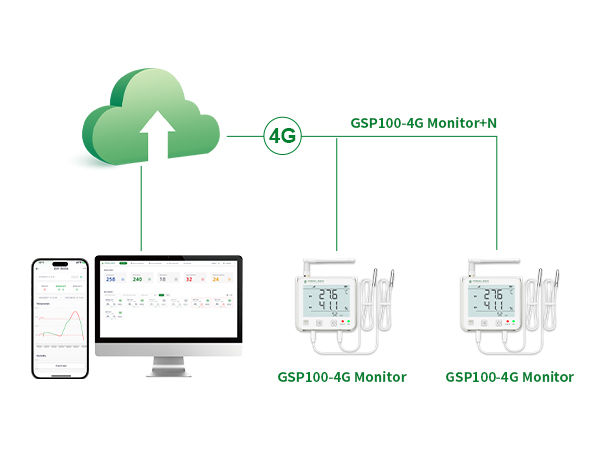
Freshliance sees digital livestock management as the main way to reach better results on a farm. We connect hardware such as our wireless data loggers to our own cloud. Data then moves without breaks from the barn straight to the manager’s phone. This setup removes the separate information pockets that once caused confusion in farm work. Managers gain a clear picture of the full production process.
The Shift from Reactive to Proactive Care
In the past, farm teams usually acted only after issues appeared. If animals got sick or weight gain slowed, then they would change the environment. IoT livestock monitoring now changes this approach to one that acts ahead of problems. Through the Freshliance cloud, farmers watch patterns over hours and days. They can notice possible troubles before animals show clear signs.
Essential Parameters for Farm Environmental Monitoring
Livestock Temperature Monitoring and Humidity Control
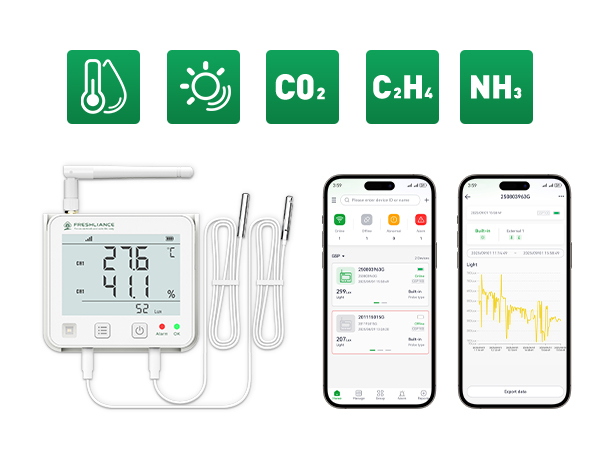
Keeping the right temperature stands as a basic need in livestock temperature monitoring. Each type of animal has its own thermoneutral zone where it uses the least energy to stay comfortable. Heat stress is often evaluated using the Temperature-Humidity Index (THI), which combines ambient temperature and relative humidity into a single indicator. Our GSP100-WiFi/4G Real-time Data Logger measures temperature and humidity with high accuracy. Farmers use it to hold this balance steady. Too much humidity often makes heat stress worse and brings breathing problems.
Monitoring Ammonia and CO2 for Better Air Quality
Air quality receives less attention than it should, yet it affects animals directly. Ammonia monitoring in livestock environments matters because high NH₃ levels harm the lungs of poultry and pigs. This leads to poorer feed use and slower growth. In the same way, CO₂ concentration is widely used as an indicator of ventilation adequacy and indoor air exchange efficiency.
The Impact of Illumination on Livestock Growth
Light levels influence the natural cycles of livestock. Poultry producers, for example, adjust light hours to increase egg output. Dairy operations often use photoperiod management strategies to support milk yield and reproductive performance. The GSP100-WiFi model includes a built-in illumination sensor that reads light from 0 to 60,000 Lux. This adds light management to overall farm environmental monitoring. Automated systems can then deliver the exact light strength needed at the correct times of day.
Advantages of IoT Environmental Sensors
Enabling Accurate Real-Time Farm Data Tracking
Conventional standalone data loggers typically require periodic manual data retrieval, which may delay corrective actions when environmental conditions change rapidly. Our IoT environmental sensors send readings right away. A real-time farm data logger uploads numbers as soon as they appear. This matters greatly in livestock farming, where a broken fan or heater can cause heavy losses within hours. Real-time tracking keeps managers informed no matter their geolocation.
Implementing Cloud-Based Monitoring Systems for Visibility
The main gain from a cloud-based monitoring system comes from clear access to information. With the Freshliance FreshLink mobile app, farmers watch several barns or different sites on one screen. This central place makes it simple to compare results between units.
Automating Data Collection to Reduce Labor Costs
Smart livestock farming brings quick savings in labor. Checking thermometers and humidity meters by hand takes several hours each week. Wireless data loggers handle this work automatically. Staff then spend more time on important jobs such as caring for animals and fixing equipment. Automatic recording also cuts mistakes that happen when people write numbers down, which helps during audits and official checks.
Features of Freshliance Livestock Monitoring Solutions
High-Precision Multi-Parameter Sensing with GSP100
The GSP100-WiFi/4G Real-time Data Logger serves as our main product for this field. It works as a central point for multiple measurements. Users connect external probes for temperature, humidity, carbon dioxide, ammonia, and illumination as needed. This flexibility fits barns as well as greenhouses and labs. The sensors deliver accurate readings, with temperature accuracy of ±0.5°C across the specified operating range.
Wireless Data Logger Connectivity via WiFi and 4G
Farms differ in their setup, so we provide choices. The GSP100-WiFi suits places with good internet. The GSP100-4G fits remote areas that rely on mobile networks. Both keep a steady link to the cloud. During network problems, the devices use breakpoint resume technology. They store up to 60,000 readings on board and send everything back once the connection returns. No data gets lost.
Rugged IP65 Protection for Harsh Farm Environments
Livestock housing environments expose monitoring equipment to dust, moisture, corrosive gases, and frequent washdowns. The GSP100 series carries a full IP65 rating and a waterproof front panel. This design keeps monitoring reliable through tough days. A 2600mAh rechargeable lithium battery gives up to 60 days of backup power if the main electricity fails.
Driving Success Through Data-Driven Decisions
Real-Time Alerts and Multi-Channel Notifications
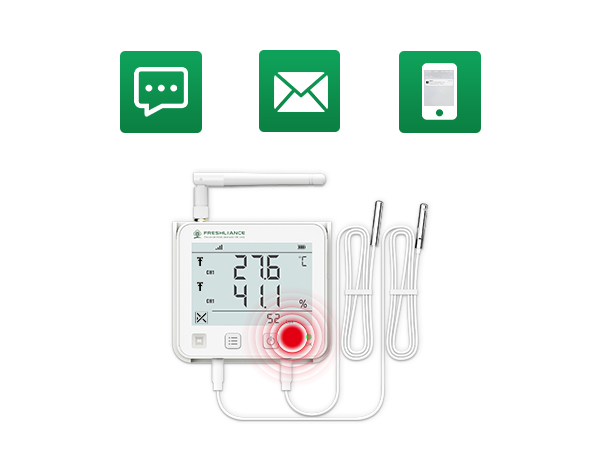
Our alert system gives strong support. Users set their own limits for each parameter. When temperature climbs too high or ammonia rises suddenly, the system sends notices by email, SMS, or app push. These warnings have helped farmers act fast and avoid large losses in many operations.
Locally Stored Data Analysis for Long-Term Farm Optimization
The cloud also stores past records that prove useful over months and years. Farmers study how seasons and growth stages connect with environmental numbers. They then decide on better building designs, added insulation, or improved ventilation.
API Integration for Unified Farm Management Systems
Businesses can use our API services to seamlessly integrate monitoring data into their existing management systems. Teams build custom screens or set up automatic controls for fans and heaters based on live readings from the wireless data loggers. This creates full digital livestock management where the barn environment adjusts by itself to animal needs.
Conclusion
Today, real-time monitoring of the environment is revolutionizing the industry through the use of IoT technologies in livestock farming. Freshliance offers all the hardware and software needed to make livestock farming smarter by implementing IoT technologies in daily operations. With our GSP100-WiFi/4G real-time data sensors and FreshLink applications, you can be sure that the monitoring is both accurate and simple. Our products withstand farm conditions and function without problems. Farmers who adopt our systems enjoy improved animal welfare, streamlined employee processes, and increased productivity.
Contact Freshliance today to see how real-time environmental monitoring for livestock farms can support your production and protect your animals.
FAQ
Q: Why is ammonia monitoring livestock health essential?
A:Ammonia builds up from animal waste in closed spaces and can reach harmful levels fast. The Freshliance GSP100-WiFi/4G with an ammonia probe watches these levels continuously. Farmers then increase ventilation before damage occurs to breathing or growth rates.
Q: Can IoT livestock monitoring reduce operational costs?
A:Yes. It cuts hours spent on manual checks, prevents losses from sudden environmental failures, and gives information that helps manage heating and ventilation more efficiently.
Q: How Do Wireless Data Loggers Improve Environmental Monitoring on Farms?
A: Wireless data loggers automatically collect and transmit environmental data without requiring manual downloads or on-site inspections. Compared with conventional monitoring methods, wireless systems provide continuous visibility, instant alarm notifications, and remote access to environmental conditions. Devices such as the GSP100-WiFi/4G Real-time Data Logger help livestock producers monitor temperature, humidity, carbon dioxide, ammonia, and illumination levels in real time, supporting faster decision-making and more efficient farm management.
Previous: Monitor Freezer Temps Without Opening the Door
Next: Protect Drug Safety with Last-Mile TTI Labels