How Temperature Data Loggers Protect Seafood Shipments
The global demand for high-quality seafood has reshaped the blue economy. However, for exporters, moving goods from the ocean to the consumer is full of risks. Seafood is one of the most temperature-sensitive commodities in global cold chain logistics. Premium deep-frozen seafood products such as tuna may require storage temperatures between -25°C and -30°C, while international regulations generally require frozen seafood to remain below -18°C throughout transportation. Maintaining stable low temperatures helps minimize microbial activity, enzymatic reactions, and biochemical deterioration that can negatively affect seafood quality. Even a brief temperature excursion can compromise product integrity, resulting in quality degradation, rejected shipments, and significant financial losses. This leads to huge insurance claims and hurts a company’s reputation. At Freshliance, we offer a vital safety net. Our goal is to "record every subtle change" to keep food safe. In this article, we look at how our USB temperature data loggers provide the cold chain compliance needed to stop spoilage in the seafood trade.
Critical Risks in Global Seafood Logistics
Temperature Control Challenges in Deep-Frozen Seafood Logistics
Seafood for the premium market spoils very quickly. Unlike other foods, fish and shellfish break down fast if they get too warm. For deep-frozen products, staying between -28°C and -30°C is a must. This temperature range helps minimize microbial activity and biochemical deterioration. If the product experiences a temperature deviation or excursion for even a short period, ice crystals might melt and freeze again. This may result in texture deterioration, reduced sensory quality, and increased food safety risks.
Financial Consequences of Cold Chain Breaches
In global trade, a loss of cold chain integrity can result in shipment rejection and product quality degradation. If a shipment arrives at a port showing evidence of temperature abuse, the buyer may reject the whole container. Without clear data, the exporter and the shipping line often fight over who is at fault. Using seafood cold chain monitoring and traceability solutions is the only way to prove the goods were handled well.
Legal Requirements for International Export
Sending seafood to places like the EU or North America means following strict rules. You must meet HACCP and FDA regulations. Maintaining auditable temperature records throughout storage and transportation is a legal requirement. If you cannot show an accurate history, customs authorities may impose additional inspections, detention, or rejection of non-compliant shipments. Freshliance Temperature Data Logger are built to meet these global standards easily.
Why Choose Disposable USB Data Loggers
Eliminating Complex Reverse Logistics
For global shipping, single-use loggers are the best seafood temperature logger choice. Ships often travel thousands of miles across many borders. Returning a reusable device is too expensive and difficult. Our disposable recorders are meant to be used once. After you download the data, you can simply discard it. This makes them perfect for one-way export trips.
Plug-and-Play Simplicity for Consignees
A big problem in seafood export monitoring is making sure the receiver can get the data. Our Fresh Tag 1 series features a built-in USB port. The person receiving the goods just plugs the logger into any computer. It works on both Windows and Mac. This simple design means people can access the data even in places with basic technology.
Ensuring Data Integrity with PDF Reports
Security is vital for supply chain records. Our Temperature Data Loggers create PDF reports that no one can change. You do not need extra software to make these files. This makes the data a "black box" record of the trip. Insurance companies and health inspectors trust these reports because they show the true history of the environment.
Freshliance Solutions for Seafood Monitoring
General Export Reliability with Fresh Tag 1
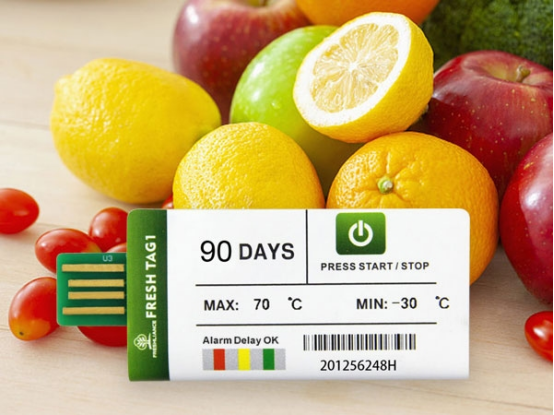
TheFresh Tag 1 USB Single-use Temperature Data Logger is widely used for temperature monitoring in seafood transportation and cold storage applications. It measures from -30℃ to +70℃ with great accuracy. It can record for up to 300 days and store a maximum of 129,600 readings. The extended logging capacity supports long-duration international ocean freight shipments. Also, its IP67 food-grade packing bag means it can sit right next to the seafood, even in wet or icy boxes.
Deep-Freeze Performance of Fresh Tag 1U
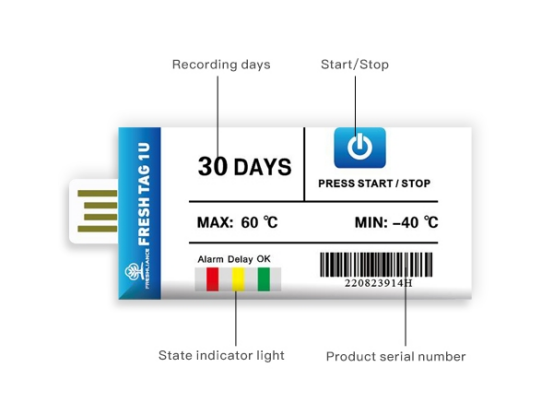
Some shipments need even colder settings. For these, we suggest the Fresh Tag 1U Disposable Low Temperature Data Logger. This model supports temperature monitoring in ultra-low-temperature environments down to -40°C. Exporters can keep them in stock and use them whenever needed. It is a very reliable temperature logger for frozen seafood transportation.
Immediate Status Checks via Fresh Tag 1D
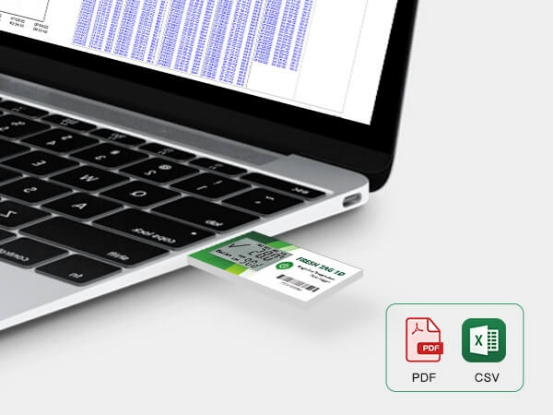
Speed is critical in seafood logistics, where receiving decisions often need to be made immediately upon arrival. The Fresh Tag 1D Single-use Temperature Data Logger features an intuitive LCD display that allows consignees to review real-time temperature data and alarm status without connecting the device to a computer. This instant visibility helps quality assurance teams quickly identify temperature excursions and evaluate shipment conditions during receiving inspections. For complete documentation, the logger can also automatically generate PDF and CSV reports via its built-in USB interface, supporting cold chain compliance and supply chain traceability.
Turning Data into Actionable Insights
Accelerating Customs and Quality Inspections
Customs checks are a risky time for the cold chain. If you have a professional report from a Freshliance logger ready, the process goes faster. It gives health officers the proof they need. They can see that the seafood stayed at the right temperature for the whole trip.
Providing Irrefutable Evidence for Claims
The rejection of goods due to spoilage caused by abnormal temperatures results in significant financial losses. A USB temperature data logger for seafood shipment acts as solid proof for insurance.
Optimizing Logistics Routes with Historical Data
You can also use Freshliance data to look at long-term trends. By checking past reports, you can see if certain routes or carriers often have problems. If a specific path always shows repeated temperature excursions, you can change your plans. This turns a simple tool into a way to improve your whole business.
Compliance with International Safety Standards
Meeting FDA and HACCP Regulations
Food safety is a top priority worldwide. Our Temperature Data Loggers help you meet HACCP and FDA rules. By providing PDF files that cannot be edited, we help you prove that you monitored every critical step in your logistics chain.
Professional Certifications for Global Access
We make sure our hardware is as compliant as your goods. Freshliance loggers have CE and RoHS marks. They also meet EN12830 standards. This means our Temperature Data Loggers are accepted by law and by tech experts in all major global markets.
Supporting Sustainable Supply Chain Goals
Sustainability means cutting down on waste. Every year, a lot of food is lost because of bad cooling. By using a strong seafood cold chain monitoring solution, we help you stop spoilage. This protects your profits and helps the global food supply stay efficient.
Conclusion
Protecting the cold chain for seafood is about more than just shipping. It is a promise to keep consumers safe and keep your brand strong. Using Freshliance single-use loggers, like the Fresh Tag 1 series, gives you facts instead of just hope. These Temperature Data Loggers act as a "black box" for your cargo. They record every change and provide the clear data needed today. As rules get tougher, having a partner to track the environment is a major edge. Let us help you guard your cargo so your seafood arrives in perfect shape every time.
Contact Freshliance today to find the perfect seafood cold chain monitoring solution and secure your high-value international shipments!
FAQ
Q: How to monitor seafood temperature during shipping?
A: To track it well, put a USB temperature data logger like the Fresh Tag 1 inside the box. These Temperature Data Loggers record the heat for the whole trip. When the goods arrive, plug the logger into a computer to see the PDF report.
Q: Why use disposable temperature loggers for seafood export?
A: Disposable temperature data loggers like the Fresh Tag 1U are great because you don't have to ship them back. This saves money on logistics. They are easy to use and provide secure reports that act as evidence of good handling.
Q: How do I generate a temperature report for a seafood shipment?
A: With Freshliance USB loggers, just plug the device into a USB port when the trip ends. The logger will make a PDF and CSV report automatically. You don't need to install any special software.
Previous: Protect Drug Safety with Last-Mile TTI Labels
Next: Stop Cold Storage Risks with Real-Time Monitoring