Reduce Fruit Storage Losses with Real-Time Data Logger
In the fruit business, one of the leading causes of economic loss is not the cost of shipping. Instead, it is the hidden environmental shifts that take place while goods sit in the warehouse. Many facility managers still rely on basic tools to track heat and moisture. However, without real-time alarms, they often find out about a problem only after the damage is done. By then, the produce has already started to rot or lose its value. At Freshliance, we know that maintaining controlled storage conditions is just the start. You need a smart, end-to-end way to continuously monitor stored produce. We have been a dedicated manufacturer of IoT temperature and humidity data loggers since 2015. Our team provides the hardware, software, and Cloud platforms you need to turn a simple warehouse into a digitally monitored storage environment. This guide shows how our Fruit Storage Monitoring Solution, built around the GSP100 WiFi/4G Real-Time Data Logger, provides continuous, data-driven environmental monitoring and helps maintain product quality throughout storage.
Common Environmental Risks in Fruit Storage Monitoring
Temperature and Humidity Monitoring for Fruit Storage
Fruits are living products that are very sensitive to their surroundings. Optimal storage temperatures vary by fruit species and cultivar, typically ranging from approximately 0°C to 13°C. Even minor temperature excursions may accelerate respiration, increase moisture loss, induce physiological disorders, and shorten postharvest shelf life. Also, continuous humidity monitoring is essential for maintaining optimal storage conditions. If the air is too dry, the fruit loses water and weight. If it is too damp, it may promote microbial growth. At Freshliance, we build our temperature data loggers to be incredibly precise. With a temperature accuracy of ±0.5°C, we make sure every environmental fluctuation is caught and recorded.
How Ethylene and CO2 Accelerate Fruit Spoilage
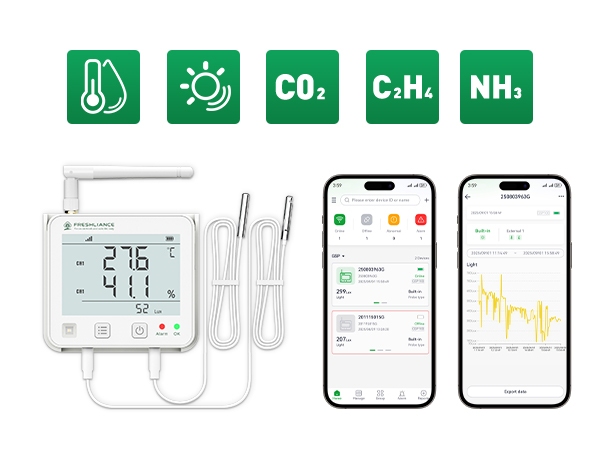
Most people focus on heat, but gases like ethylene and carbon dioxide (CO2) are critical environmental factors for fresh produce. Ethylene is a natural plant hormone that makes fruit ripen. If too much of it builds up in a cold room monitoring setup, the fruit will accelerate climacteric ripening and spoil. Excessive CO₂ may induce physiological disorders, internal browning, off-flavor development, or tissue damage depending on fruit variety. Unlike conventional data loggers, the Freshliance GSP100 can track these specific gases using extra probes.
Risks of Light Exposure and Ammonia Leaks
Too much light can speed up ripening or cause physiological damage or surface discoloration. Furthermore, many large cooling systems use ammonia. If an ammonia leak goes unnoticed, it can compromise fruit quality, equipment safety, and personnel safety. We have built the GSP100 WiFi/4G Real-Time Data Logger to monitor these environmental parameters. It can sense illumination and ammonia (NH3) levels at the same time. This helps warehouse teams spot rare but costly dangers before they compromise an entire batch of stored produce.
Why Traditional Fruit Storage Monitoring Cannot Prevent Postharvest Losses
The Danger of Delayed Data Retrieval
Standard USB temperature data loggers, like our Fresh Tag 1 or Fresh Tag 10TH, work great for shipping because they are cost-effective and easy to deploy. But in a permanent warehouse, they have one major limitation: you have to plug them in to see the data. This means you only see historical environmental records.
Lack of Immediate Alerts for Environmental Excursions
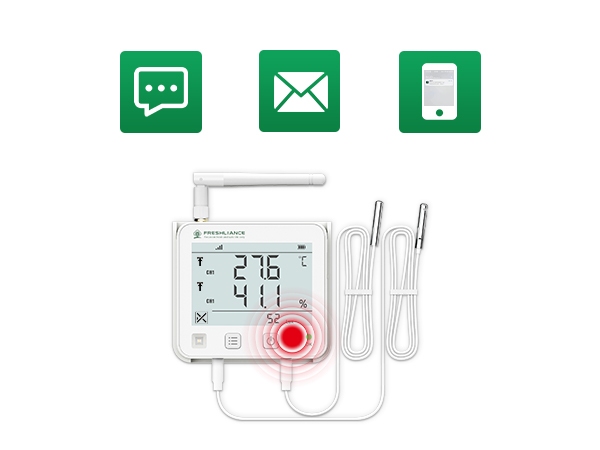
A basic logger might blink a red light if it gets too hot. But if no one is standing there to see it, that warning does nothing. Without a remote monitoring system, a failure at night can go unseen for hours. Our IoT real-time environmental data logger solves this. They send intelligent alarms through text, email, or app alerts. Whether you are at your desk or at home, you will know the moment something goes wrong.
How the Freshliance GSP100 Improves Fruit Storage Monitoring
Seamless Connectivity via WiFi and 4G Networks
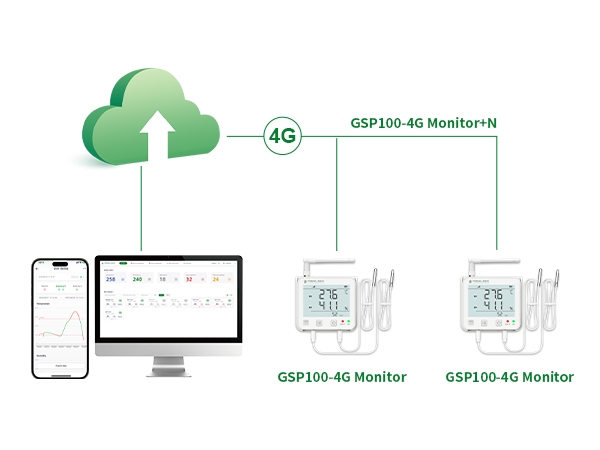
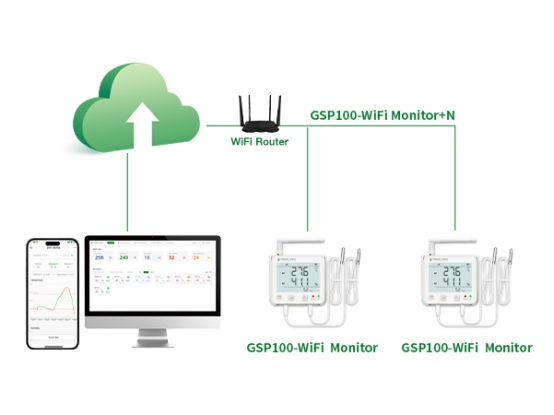
The Freshliance GSP100 series is built to stay connected. You can use the GSP100-WiFi if your warehouse has a good internet signal. If you are in a remote spot, the GSP100-4G uses cellular networks instead. Both models send data straight to the Cloud platform and FreshLink Mobile App. This ensures your fruit warehouse monitoring provides continuous monitoring. If the signal drops, the device will continue recording data and store data locally and automatically synchronize it with the Cloud once connectivity is restored.
Multi-Parameter Sensing for Total Environmental Control
The GSP100 WiFi/4G Real-Time Data Logger functions as a comprehensive environmental monitoring device. It has a built-in light sensor and can connect to two external probes. These probes can track extreme cold (down to -90°C), humidity, ethylene, CO2, and ammonia. You can mix and match these sensors based on different fruit varieties you are storing. This gives you the accurate environmental data you need to keep your specific products fresh.
Real-Time Remote Alarms for Instant Corrective Action
In the cold chain, rapid corrective action is critical. The GSP100 allows you to set up different users and alarm types. You can get email, SMS, the app, and other methods. For example, if the Freshliance GSP100 Real-time alarm system sees ethylene levels rising, it can alert the manager immediately. They can then turn on the fans to increase ventilation to reduce ethylene concentration. This type of remote monitoring supports proactive environmental management to handle problems through quick human action.
Benefits of Real-Time Data Logging for Fruit Storage Monitoring
Quantifying the Reduction in Fruit Storage Losses
Using real-time monitoring for fruit storage helps companies cut down on hidden costs. It removes the need for staff to check temperatures by hand, which saves time and stops mistakes. Also, the automated data graphing on our Cloud platform helps you see patterns. If temperature trends indicate gradual refrigeration performance degradation over a week, you can perform preventive maintenance before equipment failure occurs.
Ensuring Compliance with Global Food Safety Standards
Our IoT real-time data loggers are built to help you pass these tests. They come with ISO9001 certification and meet CE and RoHS standards. With the Freshliance Cloud and FreshLink mobile app, you can create audit-compliant reports in seconds. These PDF files prove that you kept the fruit at the right temperature, which is vital for safety checks or insurance needs.
Best Practices for Fruit Warehouse Monitoring
Optimal Placement of Real-Time Data Loggers
To get effective cold room environmental monitoring, install sensors at representative locations where environmental conditions are most likely to fluctuate. This usually means near doors or where people walk often. Our GSP100-WiFi/4G Real-time Data Logger has an IP65 protection rating. This means it can handle the dust and wetness found in farm settings. It also has a strong battery that lasts up to 60 days if the power goes out, so your data is always safe.
Utilizing Cloud Analytics for Predictive Management
The Freshliance Cloud Platform does more than just show alerts. It lets you manage all your sensors in different buildings from one screen. You can group them by room or fruit type. This level of control helps managers make data-driven operational decisions. You can maintain produce quality and extend postharvest shelf life. This supports the long-term sustainability of your business.
Conclusion
Moving from conventional loggers to smart IoT systems is a significant advancement for the fruit industry. With the Freshliance GSP100 WiFi/4G Real-Time Data Logger, you can finally identify environmental risks before they affect produce quality, like ethylene buildup or temperature excursions. Keeping your investment safe requires more than just a cold room. It requires the constant, careful eye that only real-time monitoring for fruit storage can offer. At Freshliance, we are here to record every critical environmental parameter so you can deliver the best, freshest fruit to your customers.
Want to reduce postharvest losses? Contact Freshliance today to learn about the real-time environmental monitoring solution for fruit storage and secure your warehouse with the GSP100 WiFi/4G Real-Time Data Logger.
FAQ
Q: How to reduce fruit storage losses effectively?
A: To cut losses, you need a full fruit cold storage monitoring system. By using a real-time data logger like the Freshliance GSP100, you get instant alerts about temperature, humidity, and gas shifts. This lets you fix problems before the fruit spoils.
Q: Why is humidity monitoring in fruit warehouses so important?
A: Humidity monitoring is vital because dry air makes fruit lose weight, while too much moisture causes mold. Real-time monitoring for a fruit storage setup keeps moisture at the right level to protect product quality.
Q: How does the Freshliance GSP100 help with ethylene management?
A: Ethylene makes fruit ripen too fast in a cold room monitoring space. The Freshliance GSP100 uses a special probe to track this gas and sends the data to the Cloud platform.
Previous: Prevent Temperature Excursions with Real-Time GPS Tracking
Next: How to Choose a Bluetooth Temperature Data Logger