Dry Ice Temperature Monitoring for Pharma Shipments
Dry ice temperature monitoring gives pharmaceutical teams a continuous record of an ultra-low-temperature shipment from packing through receipt. It is relevant to temperature-sensitive pharmaceuticals, biologics, blood products, diagnostic reagents, and biological samples that travel in dry ice. Freshliance supports this workflow with Atlas Pro-IUT Dry Ice Temperature Data Logger, a dry ice temperature data logger for shipment monitoring where a normal refrigerated logger may not be suitable.
Why Dry Ice Temperature Monitoring Matters in Pharmaceutical Transport
Ultra-Low Conditions Demand a Different Monitoring Approach
Pharmaceutical cold chain monitoring is often associated with 2°C to 8°C storage, but dry ice shipments operate under much lower-temperature conditions. Packaging design, dry ice distribution, sealing, handling, transit time, and package openings can all affect the temperature experienced by the payload throughout the route.
A Complete Record Supports Better Quality Decisions
When a temperature-sensitive product is outside its required environment, quality teams need more than a simple pass-or-fail statement. They need to know when the change occurred, how long it lasted, and whether the record covers the complete period that matters. A continuous temperature history gives logistics, warehouse, and quality personnel a shared basis for arrival review.
What a Dry Ice Temperature Data Logger Must Be Matched To
Temperature Range and Accuracy
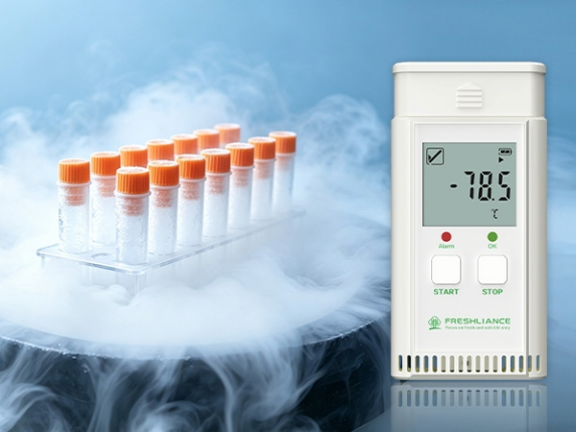
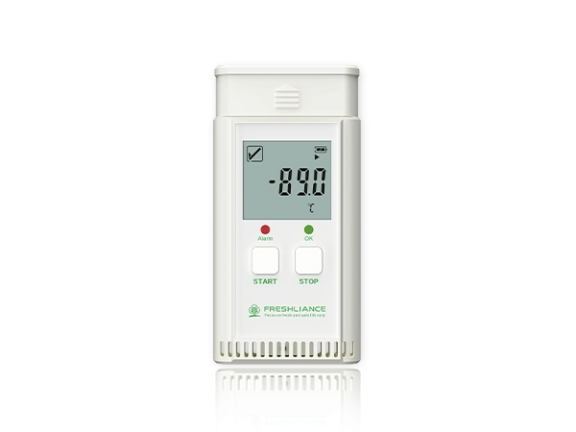
For dry ice shipments, the measurement range is one of the first specifications to check. Freshliance Atlas Pro-IUT Dry Ice Temperature Data Logger has a specified temperature range of -90°C to +70°C, allowing it to monitor ultra-low-temperature conditions and be placed directly in dry ice environments. The temperature accuracy is ±0.5°C F.S.
This makes the logger relevant to routes where conventional refrigerated monitoring ranges are insufficient. However, pharmaceutical teams should still confirm that the logger's specified range and accuracy are appropriate for the product's approved shipping profile, monitoring point, and quality requirements.
Logging Interval, Memory, and Start Control
Atlas Pro-IUT Dry Ice Temperature Data Logger provides a configurable logging interval from 1 minute to 24 hours and a start delay from 0 minutes to 24 hours. These settings allow teams to adapt recording frequency to shipment duration and handling risk.
Its memory capacity depends on the selected report format:
l PDF: up to 35,000 readings
l CSV: up to 20,000 readings
l PDF & CSV: up to 20,000 readings for each format
Alarm Limits, Event Marks, and Report Access
Atlas Pro-IUT Dry Ice Temperature Data Logger supports up to six alarm points and up to nine event marks. Alarm thresholds should be configured according to the product-specific transport requirements, validated shipping profile, or quality-approved acceptance criteria rather than generic cold-chain limits.
Event marks can be used to identify relevant moments during the route, while temporary reports allow data to be retrieved without stopping the logger.
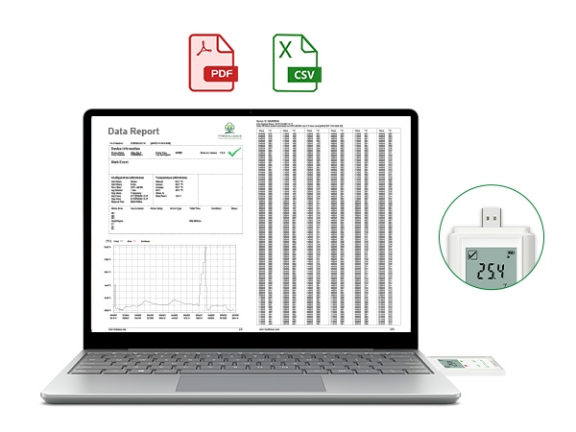
For routine receiving workflows, Atlas Pro-IUT Dry Ice Temperature Data Logger connects through USB and can automatically generate encrypted PDF and CSV reports when connected to a PC. Freshliance Tools can be used when teams need device configuration, data retrieval, trend analysis, alarm configuration, time-zone settings, or additional report-management functions.
Freshliance Atlas Pro-IUT for Dry Ice Temperature Monitoring
A Focused Choice for Pharmaceutical Dry Ice Shipments
Freshliance Atlas Pro-IUT Dry Ice Temperature Data Logger is a dry ice temperature data logger for pharmaceutical shipments requiring ultra-low-temperature documentation. Its role is straightforward: record shipment conditions, then provide evidence for receiving and quality review after the route is complete.
Application Fit Across Medical and Biological Workflows
Dry ice shipment monitoring is useful when a material's temperature history affects handling decisions. Scenarios include pharmaceutical distribution, biological samples, blood cold chain transport, diagnostic reagents, and research materials.
The right placement represents product risk, not simply the point that is easiest to retrieve. Consider payload location, dry ice distribution, likely warm zones, package openings, and recovery at destination.
A Clearer Digital Record for Routine Routes
A practical monitoring workflow begins before packing and ends only after the record has been reviewed. Configure the device, place it at the planned monitoring point, protect it according to the packaging design, and retrieve the data as part of the receiving process.
This approach replaces handwritten checks and incomplete notes with a more consistent digital record. Over repeated routes, consistent configuration and placement also make it easier to compare temperature behavior and identify where the process needs attention.
Choosing Atlas Pro-IUT for the Right Shipment Setup
Match the Logger to the Monitored Environment
Atlas Pro-IUT Dry Ice Temperature Data Logger is relevant when dry ice temperature monitoring is the central requirement and its current specifications match the shipment environment. Before deployment, confirm that the -90°C to +70°C measurement range covers the expected monitoring environment and select an appropriate logging interval within the logger's 1-minute to 24-hour configurable range. Teams should also check shipment duration against the maximum 120-day battery life, planned report format against available memory, alarm settings, logger placement, and the receiving workflow.
Avoid Assuming One Logger Fits Every Cold Chain Route
Not every cold chain route needs an ultra-low-temperature device, and not every ultra-low route has the same measurement point. Refrigerated, frozen, dry ice, and deep-freeze applications should be treated as separate operating environments with their own range, placement, and reporting needs.
Best Practices for Dry Ice Shipment Monitoring
Configure Before Packing
Set the required logging interval, start control, and alarm limits before the shipment moves into the packing area. The settings should reflect the route plan, anticipated transit length, and the organization's approved temperature criteria for the material being shipped.
Keep a consistent preparation check so that the correct device is associated with the correct shipment. This simple control reduces the chance of a logger being left inactive, configured for an unrelated route, or placed without a clear recovery plan.
Place the Logger at a Representative Monitoring Point
Logger placement should be determined according to the packaging configuration, product location, validated shipping method, and the organization's monitoring procedure. The selected position should provide a meaningful representation of the temperature conditions relevant to the payload rather than being chosen only for convenience.
Review the Record Before Next-Step Handling
After arrival, retrieve and review the temperature record before sensitive goods move to release, storage, testing, or onward distribution. The review should account for the full monitored period, alarm events, route context, and the approved handling procedure for the product.
A readable record does not replace a quality decision, but it gives that decision a stronger factual basis. It also helps teams respond more efficiently when a shipment requires investigation instead of relying on memory or a single arrival measurement.
Conclusion
Dry ice temperature monitoring turns an otherwise invisible ultra-low-temperature journey into a record that pharmaceutical teams can review, retain, and use in their handling decisions. With a -90°C to +70°C measurement range, configurable 1-minute to 24-hour logging intervals, USB-based PDF/CSV reporting, and a maximum battery life of 120 days, Freshliance Atlas Pro-IUT Dry Ice Temperature Data Logger provides a focused monitoring option for pharmaceutical and biological shipments transported in dry ice. The final logger configuration should still be matched to the product's approved temperature requirements, shipment duration, packaging design, alarm criteria, and receiving procedure.
Choose Freshliance Atlas Pro-IUT Dry Ice Temperature Data Logger to build a clearer monitoring workflow for dry ice pharmaceutical shipments. Contact us today to explore more.
FAQ
Q: What is dry ice temperature monitoring?
A: Dry ice temperature monitoring records the ultra-low temperature conditions inside a shipment or storage package that uses dry ice. It helps pharmaceutical teams review whether the product environment remained within the planned range during the relevant period and creates a digital record for receiving, quality review, and investigation when needed.
Q: Which pharmaceutical shipments can use Atlas Pro-IUT?
A: Atlas Pro-IUT Dry Ice Temperature Data Logger is relevant to pharmaceutical dry ice shipment monitoring when its current technical specifications match the route and payload requirements. Planning scenarios can include temperature-sensitive pharmaceuticals, biological products, biological samples, blood cold chain materials, diagnostic reagents, and selected vaccine or research shipments that require ultra-low-temperature documentation.
Q: What should be checked before placing a logger in a dry ice shipper?
A: Confirm the approved temperature range, logging interval, start control, alarm settings, placement point, recovery method, and report process before packing. The logger should be positioned where it represents product risk, protected by the package design, and linked to the shipment documentation so the completed record can be reviewed at destination.
Previous: How USB Temperature Data Loggers Protect Pharma Shipments
Next: How to Choose a Bluetooth Temperature Logger for Shipping