How Temperature Data Loggers Protect Seafood Cold Chain
A single use temperature data logger helps seafood shippers prove whether frozen and chilled products stayed within the required temperature range from loading to delivery. It remains inside the shipment throughout transportation and records temperature conditions automatically. For seafood cold chain operations, that record is often the clearest way to review handling quality and support receiving acceptance decisions and cold chain compliance verification.
Why Seafood Shipping Needs Continuous Temperature Records
Short temperature changes can affect product quality
Seafood is sensitive to temperature abuse (uncontrolled temperature exposure outside the required range), which may affect texture, freshness, odor, and shelf life. Frozen seafood products are typically transported and stored at temperatures below -18°C, while some premium frozen seafood supply chains may require lower temperatures such as -25°C to -30°C to better preserve quality during long-term storage. Even when a shipment looks acceptable on arrival, an undocumented temperature excursion may have occurred during transfer, loading, customs inspection, or equipment cycling.
Manual checks miss what happens in transit
Manual temperature checks are useful at loading docks and receiving points, but they cannot describe what happened during a long ocean, air, or road shipment. A container may be opened briefly, a refrigerated truck may sit in traffic, or a carton may be exposed to a temperature fluctuation zone inside the shipment. These events are easy to miss if the only record is a start temperature and an arrival temperature.
How a Single Use Temperature Data Logger Works
Trip-based recording from loading to delivery
A single use logger is designed for one shipment or storage cycle. It is usually configured before departure, activated at loading, placed with the product, and read after the trip is complete. This makes it practical for export shipments, shared logistics routes, and receivers who do not return devices.
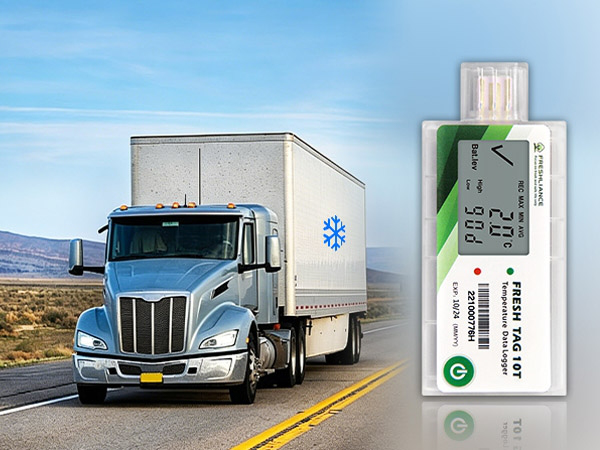
For configurable shipment monitoring, Fresh Tag 10T Configurable Single Use Temperature Data Logger supports a -30°C to +70°C range, ±0.5°C F.S. accuracy, a 1 minute to 24 hours logging interval, and a 0 minute to 24 hours start delay. It can work for up to 120 days, which suits many seafood transport and cold storage routes.
PDF and CSV reports for cold chain records
After the trip, a single use USB temperature data logger can be connected to a computer without a separate reader. Fresh Tag 10T supports PDF, CSV, and PDF&CSV reports, with memory capacity up to 65,000 readings. The PDF temperature report gives receivers a readable record, while CSV data allows deeper trend analysis if a quality team needs to compare routes or handling stages.
For configuration and review, Freshliance data logger helps users retrieve data, view graphs, check max, min, average values, alarm status, remaining days, and more.
Freshliance Fresh Tag Options for Seafood Cold Chain
Fresh Tag 10T for configurable shipment monitoring
Freshliance Fresh Tag 10T Configurable Single Use Temperature Data Logger
is a strong fit when seafood shippers need a compact single use device with visible status information. Its LCD and LED indication help users check device status, while up to six alarm points and nine event marks support more detailed trip records. Event marks can be useful when teams want to identify loading, handover, inspection, or receiving moments in the report.
The device weighs 27.5g and measures 94mm x 41mm x 8mm, making it small enough for cartons, insulated boxes, refrigerated trucks, and containers. IP65-rated protection helps protect the device against dust and water spray during transportation and handling.
Fresh Tag 1D for LCD-based receiving checks
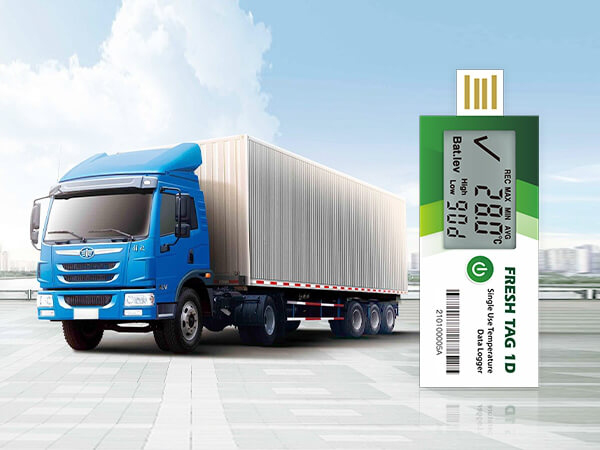
Fresh Tag 1D Single-use Temperature Data Logger is another single use temperature logger option for shipments where receiving teams want an LCD screen for quick review. Available information shows a -30°C to +70°C temperature range, ±0.5°C accuracy, 0.1°C resolution, up to 300 days, and up to 65,000 groups of storage capacity.
Fresh Tag 10TH when humidity also matters
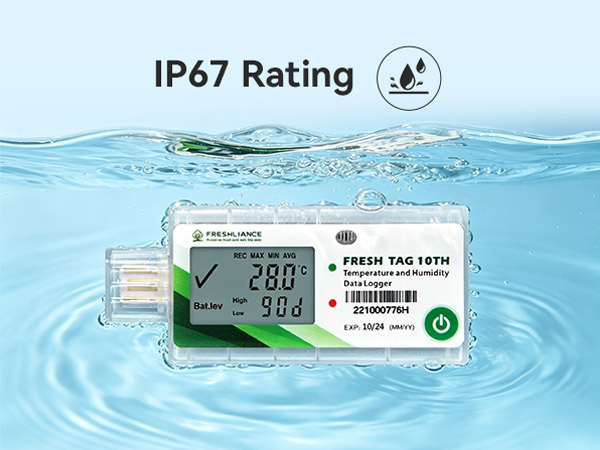
Some seafood and frozen food routes also involve packaging moisture, condensation, or chilled products where humidity may affect product presentation. Fresh Tag 10TH Temperature and Humidity Data Logger records both temperature and humidity, with a -30°C to +70°C temperature range and 0% to 100% RH humidity range.
Parameters That Matter in Frozen Food Transport
Temperature range, accuracy, and memory capacity
For seafood shipping, range and accuracy should match the expected cold chain profile. Fresh Tag 10T Configurable Single Use Temperature Data Logger covers -30°C to +70°C with ±0.5°C F.S. accuracy, which allows it to record chilled, frozen, and many general cold chain routes. Its 65,000-reading memory capacity gives enough space for frequent sampling during long journeys.
The logging interval should be chosen according to shipment duration and risk. A shorter interval gives more detail during door openings or transfer points, while a longer interval may be enough for stable long-haul transport.
Alarm points, event marks, and temporary reports
Alarm points help teams define unacceptable high or low temperature conditions before the logger starts. Fresh Tag 10T Configurable Single Use Temperature Data Loggersupports up to six alarm points, allowing different thresholds to reflect product risk or handling requirements. The red LED alarm indication gives a fast visual signal when a configured limit has been exceeded.
Event marks add context to the data. If a receiver marks the moment of inspection or a shipper marks the moment of loading, the final record becomes easier to interpret. Temporary reports also help teams view interim data without ending the recording process.
Where to Place Loggers During Seafood Shipping
Refrigerated containers and trucks
In refrigerated containers and trucks, logger placement should represent product exposure rather than only the air temperature near the cooling unit. Practical positions may include cartons near doors, upper pallet layers, or areas that are likely to experience warmer airflow. The goal is to understand what the seafood experiences during normal handling.
Cooler bags and cartons
For smaller shipments, a disposable temperature logger can be placed inside a cooler bag, insulated box, or master carton. The device should be protected from direct ice or liquid contact unless the packaging plan allows for it. Fresh Tag models are compact and light, so they can travel with the shipment without changing the packing format.
Receiving, inspection, and handover points
The final reading process should be simple enough for receiving staff to perform consistently. USB report generation allows receiving teams to quickly access the shipment temperature record and save detailed data files for quality review. Freshliance supports this workflow by offering single use USB loggers that fit routine seafood, frozen food, and general cold chain operations.
Conclusion
A single use temperature data logger gives seafood shippers a practical way to document cold chain quality without asking receivers to return devices. Freshliance Fresh Tag loggers combine compact trip-based monitoring, automatic PDF and CSV reports, configurable alarms, and shipment-friendly designs for seafood, frozen food, refrigerated trucks, containers, cooler bags, and cold storage rooms. For teams that handle sensitive seafood products, clear temperature records support receiving inspection decisions and product acceptance evaluation.
Explore Freshliance single use USB temperature data logger solutions to establish more reliable seafood cold chain documentation and improve shipment visibility from loading to delivery.
FAQ
Q: Why use a single use temperature data logger for seafood shipping?
A: A single use temperature data logger travels with one shipment and records the full temperature history from loading to delivery. It is useful when devices will not be returned, when multiple parties handle the cargo, or when receivers need a clear PDF temperature report for arrival review.
Q: When should seafood shippers choose a humidity logger?
A: A humidity logger is useful when packaging moisture, condensation, or chilled storage conditions may affect seafood appearance, packaging condition, or handling quality. Fresh Tag 10TH Temperature and Humidity Data Logger
records temperature and humidity, so teams can review both temperature stability and moisture conditions after the trip.
Q: Where should a disposable temperature logger be placed?
A: Placement should reflect the product's real exposure. In containers or trucks, teams often monitor higher-risk areas such as door zones, upper pallet layers, or cartons far from stable airflow. In smaller shipments, the logger can travel inside the insulated box or carton with the seafood.
Previous: How to Choose a Bluetooth Temperature Logger for Shipping
Next: Time Temperature Indicator vs Data Logger: Which Fits