Time Temperature Indicator vs Data Logger: Which Fits
A time temperature indicator is best when a receiving team needs an immediate visual answer: did this package experience unacceptable temperature exposure? A temperature data logger is better when the team needs a downloadable record for review, traceability, or release decisions. In cold chain temperature monitoring, the right tool depends on product risk, route length, documentation needs, and how quickly handlers must act.
Why a Time Temperature Indicator Solves a Different Problem
Visual alarms help teams act fast
A time temperature indicator is designed for quick package-level screening. Instead of connecting a device and interpreting a chart, staff can read alarm status directly from the label or LCD screen. That workflow is useful for vaccines, diagnostic reagents, seafood, biologics, and other temperature-sensitive products that must be accepted, isolated, or reviewed quickly.
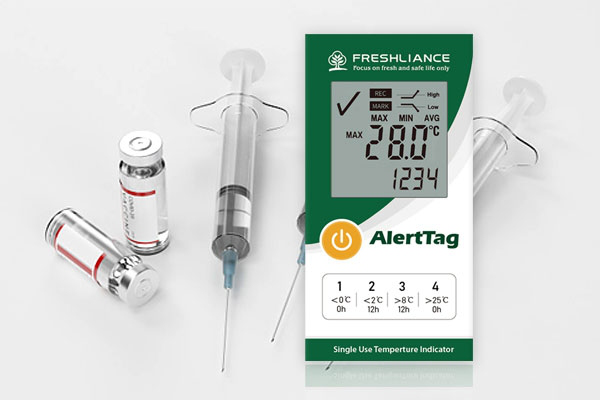
Freshliance AlertTag T10 is a disposable LCD time temperature monitor with up to four alarm points. It supports instant or cumulative irreversible alarms, helping receivers see whether exposure happened once or accumulated over time.
Irreversible status supports simple receiving checks
AlertTag T10 LCD Disposable Time Temperature Monitor/Indicator can be equipped with up to 4 pre-programmed alarm points, the indicator displays the corresponding alarm directly on the LCD screen when temperature thresholds are exceeded. Its clear visual alarms allow on-site personnel to quickly detect temperature excursions without additional software or equipment.
When a Temperature Data Logger Is the Better Choice
Full records matter for traceability
A temperature data logger records the temperature history, not only the alarm result. That matters when a quality team needs to know when a deviation occurred, how long it lasted, and whether most of the route stayed within acceptable limits. The record can also help compare packaging, warehouses, carriers, and transportation routes.
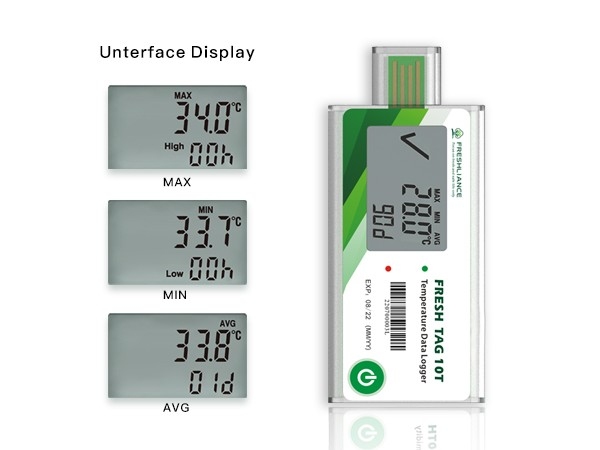
Fresh Tag 10T Configurable Single Use Temperature Data Logger is a configurable single-use temperature data logger for monitoring and recording temperature changes during transportation and storage. It can be used in refrigerated containers, refrigerated trucks, cooler bags, cooling cabinets, medical cabinets, freezers, laboratories, and cold chain package workflows.
PDF and CSV reports support shipment review
Fresh Tag 10T Configurable Single Use Temperature Data Logger automatically generates encrypted PDF and CSV reports on a PC. It supports up to 65,000 readings, a logging interval from 1 minute to 24 hours, battery life up to 120 days, up to six alarm points, and up to nine marks. These functions give quality teams more context than a visual alarm alone.
Key Product Differences Buyers Should Understand
Alarm visibility versus historical data
A disposable temperature indicator is strongest when the question is immediate: did the package move outside the allowed condition? A data logger is stronger when the question is analytical: what happened during the full journey? For audits, complaints, route review, or supplier evaluation, a downloadable report usually carries more value than a visible alarm alone.
Single-use simplicity versus report depth
AlertTag T10 LCD Disposable Time Temperature Monitor/Indicator offers a -30°C to +70°C temperature range, full-range accuracy of +/-0.5°C, a 10-second logging interval, IP67 protection, CE and EN12830 certification, and a compact 70mm x 36mm x 5mm body. Its 3.0V CR2032 lithium battery supports up to 180 days of operation.
Fresh Tag 10T Configurable Single Use Temperature Data Logger is also single-use, but its purpose is documentation. It has a -30°C to +70°C range, +/-0.5°C F.S. accuracy, IP65 protection, LCD and LED indication, USB connection, Windows/mac OS compatibility, and automatic PDF/CSV report output.
Duration and placement shape the choice
Placement affects the reading. An indicator attached outside a package may reflect handling exposure, while a logger placed near the product can capture conditions closer to the goods. Duration also matters: AlertTag T20 Disposable Time Temperature Monitor/Indicatorcan support up to one year of working time, while AlertTag T10 LCD Disposable Time Temperature Monitor/Indicator runs up to 180 days and Fresh Tag 10T Configurable Single Use Temperature Data Logger supports up to 120 days of battery life.
Freshliance Product Options for Different Monitoring Needs
AlertTag T10 for compact LCD temperature indication
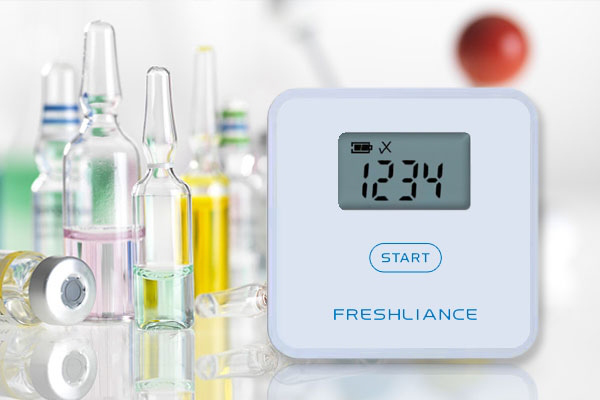
The Freshliance AlertTag T10 LCD Disposable Time Temperature Monitor/Indicator fits cold chain operations that need visible alarm information without software. Its LCD screen, irreversible alarms, IP67 protection, and compact size make it practical for receiving checks in pharmaceutical, life science, food, and biological sample logistics.
For teams that want compact electronic indication, AlertTag T10 LCD Disposable Time Temperature Monitor/Indicator supports simple temperature exposure checks at the parcel or carton level.
AlertTag T20 for longer indicator monitoring
AlertTag T20 Disposable Time Temperature Monitor/Indicator extends the indicator concept for longer monitoring windows. It supports a -40℃ to +70℃ range, +/-0.5℃ full-range accuracy, a large LCD display, programmable alarm points, IP67 protection, and up to one year of working time. It suits routes or storage workflows where a visual indicator may remain active for longer.
Fresh Tag 10T for PDF-based temperature records
When shipment review depends on downloadable files, Fresh Tag 10T Configurable Single Use Temperature Data Logger is more suitable when downloadable temperature records are required. Its automatic PDF/CSV reporting, 65,000-reading capacity, configurable intervals, and multiple alarm points support review after arrival.
Freshliance positions this logger for multiple cold chain stages, from refrigerated trucks and containers to medical cabinets, freezer spaces, cooler bags, and laboratories. That makes it useful for teams that want one standardized disposable logger across several shipment formats.
How to Choose Between Indicator and Logger
Choose by risk and documentation needs
Lower-risk or high-volume shipments may only need visible warning status, especially when goods can be checked quickly at arrival. Higher-risk shipments usually need a stronger record because the decision may involve quality, safety, or product release. If the organization needs PDF reports, CSV files, or shipment archives, a data logger is the natural choice.
Choose by handling workflow
The best device is the one people will use correctly. A simple time temperature indicator may fit a busy dock where staff only need alarm status, while a data logger fits quality teams that need the full temperature profile. Before standardizing, decide who activates the monitor, where it sits, who reads it, and what action follows an alarm.
For category-level selection, the Time Temperature Indicator range helps match visual alarm tools with cold chain packaging, shipping, and storage workflows.
Conclusion
A time temperature indicator and a temperature data logger are not rivals; they answer different cold chain questions. Indicators provide fast, visible temperature excursion status for frontline handling, while loggers create downloadable records for traceability and review. Freshliance supports both needs with disposable LCD time temperature indicators such as AlertTag T10 and AlertTag T20, as well as PDF-based loggers such as Fresh Tag 10T.
Choose the device that matches your risk level, documentation needs, and handling workflow, then build a monitoring routine that people can follow consistently. Explore Freshliance temperature monitoring options to make package checks, shipment review, and cold chain quality decisions more dependable.
FAQ
Q: What is the main purpose of a time temperature indicator?
A: A time temperature indicator gives a visible warning when a product has experienced temperature exposure beyond preset limits. It is best for fast receiving checks, package-level screening, and simple cold chain decisions where staff need to know whether goods should be accepted, isolated, or reviewed.
Q: When should I use Fresh Tag 10T instead of AlertTag T10?
A: Use the Fresh Tag 10T Configurable Single Use Temperature Data Logger
when you need downloadable temperature records, multiple alarm points, event marks, and automatic PDF/CSV reports. Use the AlertTag T10 LCD Disposable Time Temperature Monitor/Indicator when the main need is a disposable LCD indicator that shows irreversible visual alarm status quickly during receiving, storage, or transport handling.
Q: Can indicators and data loggers be used together?
A: Yes. Many cold chain teams use indicators on individual packages for fast screening and place data loggers in selected shipments for detailed records. This approach keeps daily handling simple while preserving deeper temperature evidence for exception review, supplier evaluation, and route improvement.
Previous: How Temperature Data Loggers Protect Seafood Cold Chain
Next: Facility Temp & Humidity Monitoring: IoT Data Loggers with API