Real-Time IoT Temperature Logger for Cold Chain Logistics
A real-time IoT temperature logger improves cold chain logistics by recording shipment conditions at configurable intervals, storing the data locally, transmitting selected readings through a mobile network, and warning responsible teams when configured limits are crossed. Instead of discovering a problem only after delivery, operators can review temperature, humidity, location, and selected handling events while the shipment is still moving and decide whether intervention is possible.
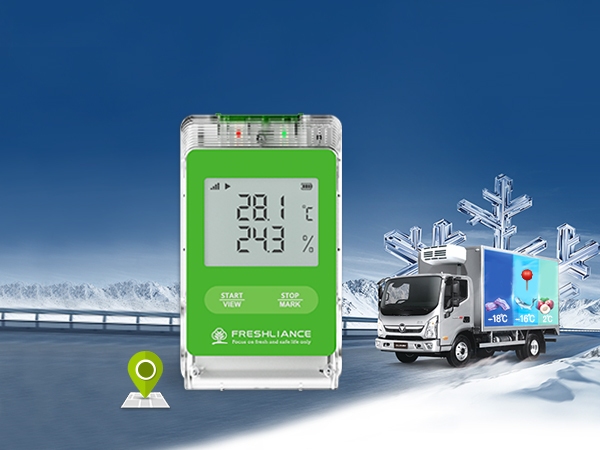
Why Cold Chain Logistics Needs Real-Time Visibility
Manual downloads create decision gaps
A traditional logger can provide a valuable trip record, but the data may remain inside the device until someone connects it to a computer. That workflow is appropriate for many routine shipments, yet it provides limited visibility for remote intervention while the shipment is in transit. A refrigeration failure, prolonged door opening, loading delay, or other event may result in a temperature excursion that is detected only after delivery.
Real-time temperature monitoring changes the timing of the decision. Configurable uploads and temperature excursion alerts can move the review point from the end of the journey to the moment a developing problem is detected. The system cannot correct a refrigeration failure by itself, but it can give the responsible team earlier information for route coordination, equipment checks, or documented escalation.
Environmental data needs transport context
Temperature data can identify an excursion, while contextual data can help pinpoint when and where it occurred and support subsequent investigation. Humidity can help describe the surrounding environment, location data can show where an event occurred, and illumination sensing can help identify potential door or package-opening events.
How a Real-Time IoT Temperature Logger Works
Sensors and local memory build the trip record
The logger measures at a configured interval and stores each reading in local memory. Fresh Tracker 10 real-time data logger records built-in temperature from -30°C to +70°C with stated accuracy of ±0.5°C full scale, while its humidity channel covers 0-100% RH. Humidity accuracy is stated as ±3% RH at 25°C and 20-80% RH, and ±5% RH under the other listed conditions.
The logger can store up to 30,000 readings per probe. An external probe can position the sensing point closer to the monitored product or within the payload area, while the logger itself remains positioned to maintain reliable communication. Probe selection and placement should follow the shipment protocol and packaging design.
4G connectivity turns readings into alerts
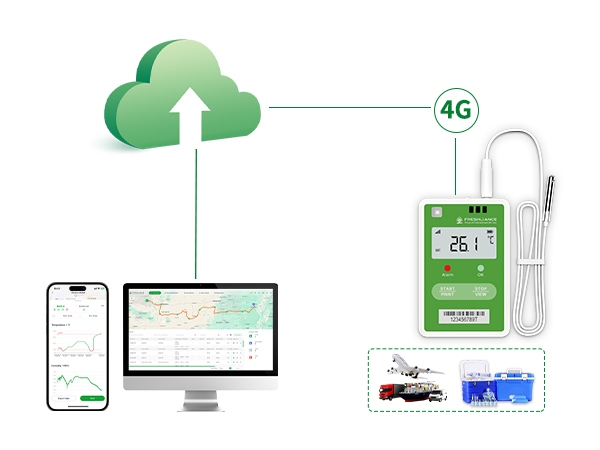
A 4G-enabled temperature data logger uploads recorded data to a cloud at a configurable transmission interval. Fresh Tracker 10 real-time data logger supports 4G LTE Cat 1 with optional 2G, remote review through an app or cloud, and notifications through app push, SMS, or email. The default configuration includes a 10-minute logging interval, a 60-minute uploading interval, and a 2–8°C alarm threshold; these parameters are user-configurable.
Offline caching and flight mode preserve continuity
Cellular connectivity may be unavailable or intermittent during certain transport segments, including remote areas, enclosed facilities, and air transportation. Fresh Tracker devices continue logging locally when a network is unavailable and can upload cached readings after communication returns.
Freshliance Options for In-Transit Monitoring
Fresh Tracker 10 for Real-Time Temperature and Environmental Monitoring
The Fresh Tracker 10 real-time data logger combines temperature and humidity sensing with LBS positioning and optional WiFi or GPS positioning. Optional illumination and shock sensors can extend the route record when package access or handling conditions matter. The device measures 101 × 60 × 34 mm, weighs 200 g, and has a listed maximum operating period of 120 days, subject to configuration and operating conditions.
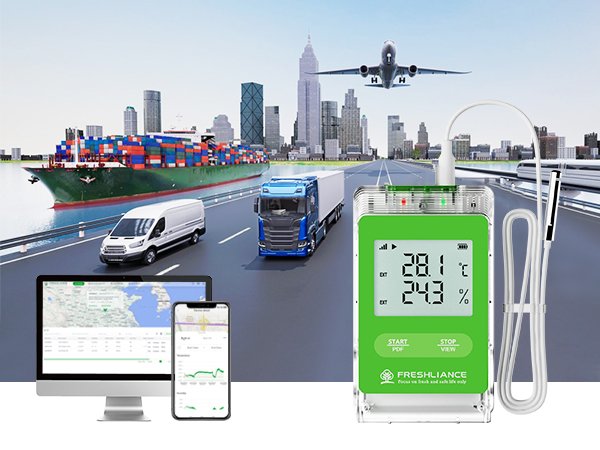
Fresh Tracker 20 for Space-Constrained Medical Transport
The Fresh Tracker 20 compact 4G Real-time Data Logger measures 89 × 59 × 21 mm and is designed for space-constrained medical transport applications, including vaccine transport boxes, thermal shipping containers, and incubators. It supports temperature and humidity monitoring, LBS with optional GPS and WiFi positioning, Bluetooth printing, configurable flight mode, offline data recovery, and optional illumination or shock sensing.
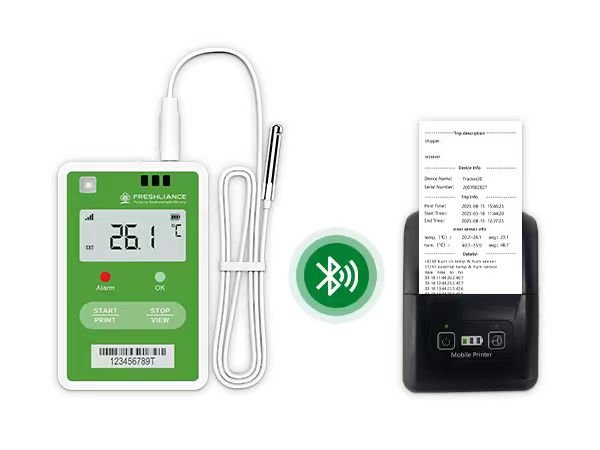
Fresh Tracker 20 compact 4G Real-time Data Logger also supports a rechargeable and replaceable 3000mAh battery, with a listed maximum operating period of 120 days under the stated conditions.
What to Evaluate Before Deployment
Choose Sensors Based on Risk-Based Monitoring Requirements
Temperature is the primary critical parameter in most cold chain applications, but other sensors should solve a defined problem. Humidity may matter when condensation, packaging performance, or moisture-sensitive materials are involved. Location is useful when teams need route context, while illumination and shock sensing can support investigations into opening or handling events.
External probes require the same discipline. A buffered probe can reduce the influence of short-term ambient air temperature fluctuations and provide a temperature response that more closely represents the thermal conditions experienced by the payload. Teams should document where the device and probe are positioned so that repeated routes produce comparable records.
Configure alarms around the product requirement
Food, pharmaceuticals, biological materials, and specialty chemicals can have different acceptable ranges and response procedures. Alarm thresholds and alarm delays should be configured according to the product specification and the applicable quality management procedure.
Alarm design should also avoid unnecessary noise. Poorly configured alarm thresholds can result in excessive false or nuisance alarms, reducing alarm effectiveness and increasing the risk of alarm fatigue. Multi-point alarms, appropriate delays, and documented response ownership help turn notifications into a practical operating tool.
Plan for connectivity and data handover
A real-time monitoring system depends on cellular connectivity, cloud access, user permissions, data governance, and defined alarm-response procedures. Before deployment, teams should assess route coverage, planned flight segments, receiving-site access, report requirements, and who is expected to respond to an alert. Local memory and report export provide continuity, but they do not replace operational responsibility.
Applications Across Cold Chain Logistics
Food and refrigerated distribution
Fresh produce, seafood, meat, dairy products, prepared foods, and other refrigerated cargo may pass through several vehicles, staging areas, and receiving points. A real-time IoT temperature logger can show whether an excursion began during transport, at a transfer point, or close to delivery. Humidity and location data can add useful context when the cargo and packaging require them.
Pharmaceutical and medical transport
Medicines, vaccines, diagnostic materials, blood products, and other medical shipments often require a clear chain of temperature records and controlled handovers. Compact devices may be preferable inside thermal boxes, while larger multi-sensor devices can suit pallets, vehicles, or longer multimodal routes. The product specification and responsible quality process determine the correct limits and probe arrangement.
Conclusion
A real-time IoT temperature logger improves cold chain logistics by combining a continuous local record with remote visibility and timely alerts. Freshliance solutions can add temperature, humidity, positioning, optional handling sensors, offline data recovery, flight mode, and local reporting according to the route. The best result comes from choosing only the functions that answer a real operational risk and configuring them around the product, packaging, network conditions, and response process.
Explore Freshliance software and cloud monitoring tools to connect shipment data with a practical review and alert workflow.
FAQ
Q: What is a real-time IoT temperature logger?
A: A real-time IoT temperature logger measures shipment conditions, stores readings locally, and transmits selected data through a network to an app or cloud platform. It can also issue configured alerts when conditions cross defined limits.
Q: What happens when a 4G temperature logger loses network coverage?
A: A properly configured logger continues recording to its local memory even when 4G coverage is unavailable. Fresh Tracker devices can cache data during the interruption and upload stored readings after the connection returns. Remote visibility pauses during the outage, but the underlying trip record can remain continuous for later review.
Q: Does every cold chain shipment need GPS and shock monitoring?
A: No. Temperature is the primary requirement for many routes, while GPS, WiFi positioning, illumination, shock, or humidity data should be added only when they address a defined risk. Extra channels can improve event interpretation, but they also require suitable configuration, placement, review responsibilities, and a clear reason for collecting the data.
Previous: IoT Temperature & Humidity Monitoring for Unattended Sites
Next: How to Choose an Extreme Temperature Data Logger for Process Validation