Temperature Probes for Food Safety: Cold Chain Guide
Temperature probes can improve food safety monitoring by allowing the sensing point to be positioned at a defined monitoring location, rather than relying only on the air temperature immediately surrounding the logger. In refrigerated transport, cold rooms, food warehouses, and receiving areas, probe placement can reveal localized temperature increases, uneven airflow, or temperature variations that may not be captured by a sensor positioned outside the monitored load. Freshliancesupports this workflow with external-probe, reusable, single-use, and wireless monitoring solutions.
Why Temperature Probes Matter in Food Safety Temperature Monitoring
Air Temperature vs. Product Temperature
A built-in sensor measures the environment around the device. That can be suitable for general room monitoring, but it may not represent the temperature inside a carton, pallet, refrigerator, insulated box, or tightly packed storage area. Food products can experience different conditions from the air near a wall or doorway.
An external temperature probe separates the sensing point from the display or logger body. The probe can be placed closer to the monitored food zone while the logger body can remain outside the monitored location. This arrangement is useful when the most important reading is inside a container, cabinet, or difficult-to-reach area.
Reducing Blind Spots During Handling
Cold chain conditions can change during loading, door opening, transfer, and receiving. Probe-based monitoring helps teams evaluate the selected monitoring location, sensor position, and duration of temperature excursions.
Choosing a Freshliance Logger for Food Applications
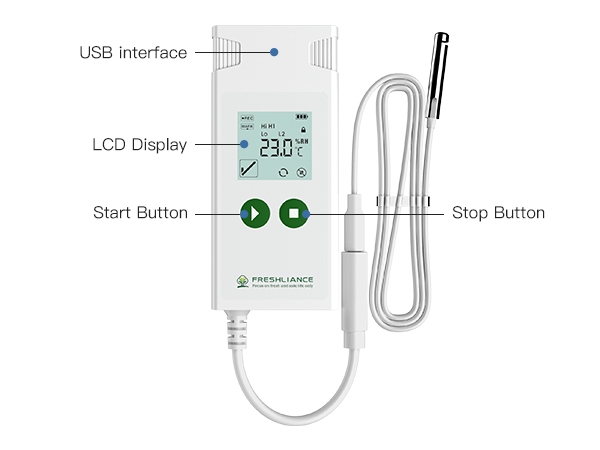
Atlas Log-TH for External Probe Monitoring
Freshliance Atlas Log-TH Temperature and Humidity Data Logger is a fit when a food monitoring plan needs an external probe and temperature-humidity recording in the same device. It supports an external probe design, configurable parameters, up to six alarm points, trip marks, and a flexible external probe cable that can help position the sensing point in refrigerators, insulated containers, or other locations where the sensor needs to be separated from the logger body.
The documented temperature range is -40°C to +85°C, with humidity accuracy of ±3% RH under the specified 25°C, 20%–80% RH conditions, and ±5% RH under other conditions. This range gives the logger flexibility for chilled storage, refrigerated handling, and other temperature-sensitive food workflows, but the selected probe and final installation should still be matched to the actual application.
TagPlus-TH for Reusable Cold Chain Monitoring
When the same logger will be used repeatedly across storage, handling, and delivery checks, a reusable temperature and humidity data logger can support a standardized reusable monitoring workflow. TagPlus-TH Temperature Humidity Data Logger is designed for multi-use cold chain monitoring and can record temperature and humidity for food, pharmaceuticals, and other sensitive products.
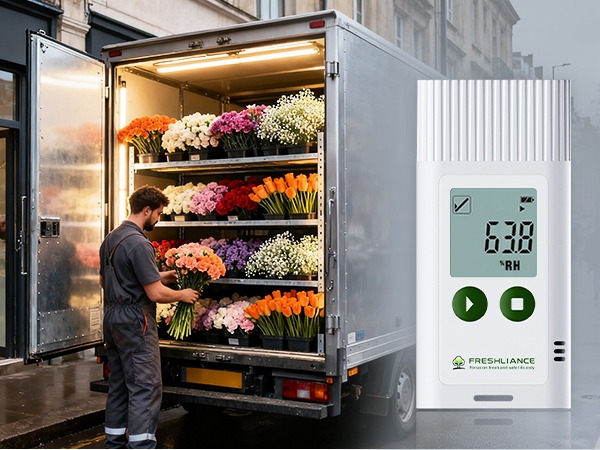
TagPlus-TH Temperature and Humidity Data Logger covers -30°C to +70°C, with an optional -40°C to +60°C temperature range. It measures 0–100% RH, stores up to 35,000 readings, supports logging intervals from 1 minute to 24 hours, has a shelf life of 3 years, and offers a maximum battery life of 180 days. It can automatically generate PDF and CSV reports, which is useful for scheduled warehouse checks and repeatable handover records.
Fresh Tag 10TH for Single-Use Shipments
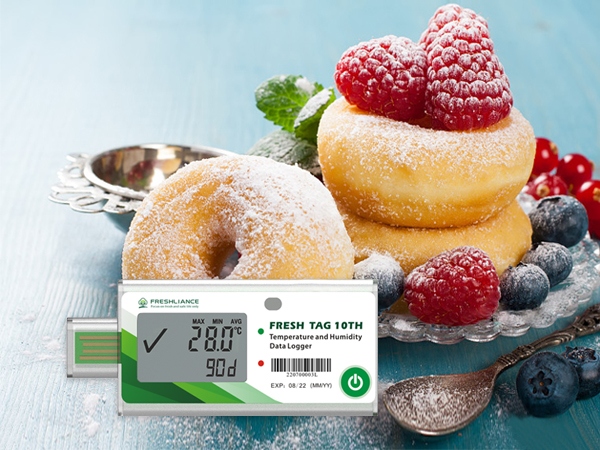
A single-use shipment often benefits from a single-use temperature logger that travels with the food and produces a report at destination. Fresh Tag 10TH Temperature and Humidity Data Logger is designed for refrigerated containers, refrigerated trucks, cooler bags, cooling cabinets, freezers, and similar cold chain stages.
The device records from -30°C to +70°C with ±0.5°C F.S. temperature accuracy, stores up to 65,000 readings, and can operate for up to 120 days. Its LCD and LED indicators, up to six alarm points, nine event marks, and PDF/CSV reports accessible on a PC allow receiving teams to review shipment conditions without returning the reusable data logger.
Applying Temperature Probes Across Food Workflows
Meat, Seafood, and Frozen Products
Frozen meat and seafood can experience different conditions at the center of a load, near the door, or near the evaporator or air-supply outlet. Place the logger at a monitoring location representative of the product's temperature exposure; an external probe can help when the sensing point must sit inside a package, insulated container, or selected pallet position. Fresh Tag 10TH Temperature and Humidity Data Logger suits one-way routes, while TagPlus-TH Temperature and Humidity Data Logger supports recurring checks.
Produce, Dairy, and Chilled Foods
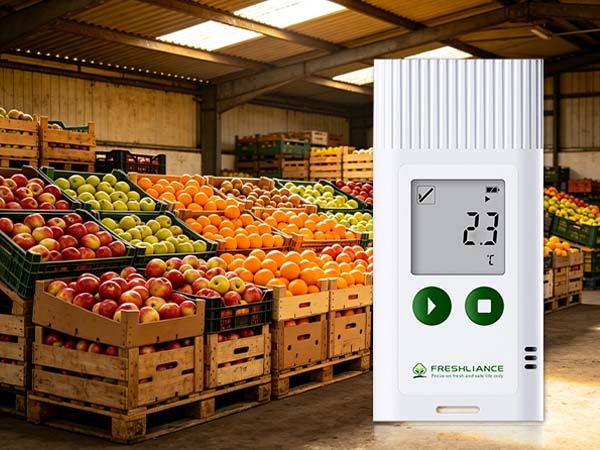
Fresh produce, dairy, flowers, and other chilled goods may be affected by both temperature and humidity. A temperature and humidity data logger can show whether a storage area remained stable, while an external probe can help when the critical point is inside a cabinet, box, or dense load.
The monitoring plan should distinguish between product temperature, surrounding air, and humidity. A temperature data logger documents temperature conditions; it does not independently establish product safety, quality, or regulatory compliance. Temperature records should be evaluated together with product specifications, handling records, receiving inspections, calibration records, and the site's HACCP or food safety plan.
Receiving Inspection and Excursion Review
At receiving, PDF or CSV reports can show alarm points, maximum and minimum values, and the timing of unusual conditions instead of relying only on a visual product check. The report should connect to a response process that identifies the shipment or zone, assigns alarm review, and documents the final decision.
Technical Factors That Shape Monitoring Quality
Range, Accuracy, and Probe Selection
Temperature range should match the real environment rather than the most extreme number in a product brochure. TagPlus-TH and Fresh Tag 10TH Temperature and Humidity Data Logger cover common refrigerated and frozen food workflows, while Atlas Log-TH Temperature and Humidity Data Logger is more appropriate when an external probe and a wider temperature measurement range combined with temperature and humidity monitoring.
Probe selection also matters. A temperature probe and a temperature-humidity probe answer different monitoring questions, while cable length affects whether the sensor can reach the intended location without compromising a package or door seal.
Memory, Alarms, and Report Formats
A short shipment may need only a compact memory capacity, while a warehouse program may need weeks or months of records. Fresh Tag 10TH Temperature and Humidity Data Logger supports up to 65,000 readings and up to 120 days of operation, while TagPlus-TH Temperature and Humidity Data Logger supports up to 35,000 readings and a replaceable battery with a stated life of up to 180 days.
Alarm points should reflect the site's approved operating criteria. PDF and CSV reports allow receiving, quality, logistics, and management teams to review the same temperature record according to their respective operational requirements.
Scaling to Large Food Warehouses
LoRa Tag LT100 for Multiple Storage Zones
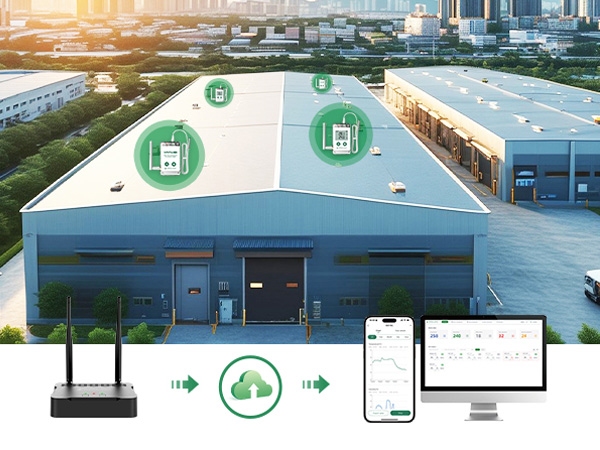
Large food warehouses may need monitoring across racks, aisles, cold rooms, loading areas, and separated temperature zones.LoRa Tag LT100 Temperature Humidity Logger can use built-in sensing or one optional external probe and send data through a compatible GAEA seriesG2000-S LoRa gateway. Its listed open-air communication distance is up to 400 m, with up to 100,000 local readings and up to six alarm points.
The LT100 Temperature Humidity Logger built-in sensor covers -30°C to +70°C and 0-100% RH. The external probe option can be selected for a separate temperature point or a broader range, while the gateway-based architecture supports centralized cloud platform and mobile review. This architecture is better suited to multi-zone environmental monitoring, where multiple monitoring points need to be managed through a centralized gateway and cloud.
Build the Monitoring Routine Before the Device List
A scalable food temperature monitoring program should begin with defined monitoring locations, supported where appropriate by temperature mapping to identify spatial temperature variation. Define which locations need product-zone measurement, which require humidity, which need an external probe, and which must generate an alert instead of only a later report.
Device selection should follow the monitoring architecture: Atlas Log-TH Temperature and Humidity Data Logger for external-probe temperature and humidity measurement, TagPlus-TH Temperature and Humidity Data Logger for reusable monitoring, Fresh Tag 10TH for single-use shipment records, and LT100 for multi-zone wireless monitoring. The monitoring system should be selected and configured to support a defined review, escalation, and corrective-action process.
Conclusion
Temperature probes make food safety temperature monitoring more meaningful by placing the sensing point closer to the product and the actual risk. Freshliance offers several ways to build that record, from Atlas Log-TH Temperature and Humidity Data Logger external probe monitoring to TagPlus-TH Temperature and Humidity Data Logger reusable logging, Fresh Tag 10TH single-use shipment records, and LoRa Tag LT100 Temperature Humidity Logger coverage for larger facilities.
Choose the logger, probe type, range, report format, and alarm workflow together so the data can support storage review, transport handover, and excursion investigation.
FAQ
Q: Why are external temperature probes useful in food safety monitoring?
A: An external probe allows the sensing point to be positioned independently from the logger body, which can be useful when the monitoring location is inside a container, within a defined load position, or otherwise difficult to access. This helps teams investigate local temperature differences caused by loading, airflow, door openings, or insulation while keeping the main device easier to access.
Q: Which Freshliance logger suits single-use food shipments?
A: Fresh Tag 10TH Temperature and Humidity Data Logger is designed for single-use cold chain transport and storage. It supports -30°C to +70°C measurement, up to 65,000 readings, up to 120 days of operation, LCD and LED status indication, alarm points, event marks, and automatic PDF/CSV reports for destination review.
Q: When should a warehouse consider LoRa Tag LT100?
A: LT100 is useful when a food warehouse has multiple separated monitoring zones. It supports built-in temperature and humidity sensing, one optional external probe, up to 400 m open-air LoRa communication, local storage for up to 100,000 readings, and gateway-based cloud review for distributed facility monitoring.
Previous: Blood Cold Chain Monitoring: Choose the Right Data Logger
Next: No