Real-Time Environmental Monitoring: IoT & BMS Integration
Real-time environmental monitoring can support BMS-related workflows by providing real-time temperature, humidity, and other environmental data through cloud and API-based system integration.
Depending on the communication architecture, devices may upload data directly through WiFi / 4G/ LAN, or transmit readings through a gateway to the cloud. Freshliance provides this layered approach for rooms, warehouses, laboratories, hospitals, and smart facilities.
The primary operational benefit is faster detection of environmental changes and potential excursions. A scheduled inspection may confirm that a room is acceptable at one moment, while connected monitoring can show how conditions change between visits and notify designated personnel when predefined alarm thresholds are exceeded. In facilities that already use a BMS, an IoT monitoring platform can operate as an additional data layer for environmental visibility, while the BMS continues to manage its configured building automation and control functions.
Why BMS Workflows Benefit from Real-Time Environmental Data
From periodic checks to continuous visibility
Building management teams often work across many rooms, equipment areas, storage zones, or floors. Manual readings can be useful for scheduled checks, but they leave observation gaps between visits and make it difficult to compare conditions across locations. IoT environmental monitoring creates a continuous time-series record of environmental conditions that can be viewed remotely instead of relying on a single point-in-time measurement.
Temperature and humidity as operational signals
Temperature and humidity trends can provide evidence for investigating refrigeration performance, environmental disturbances, air-exchange effects, or other abnormal operating conditions. The data does not replace engineering judgment or the building's approved control logic. It provides operators with trend data and threshold-based alerts to help determine when a room, cabinet, or storage zone requires further investigation.
How Freshliance Builds the IoT Monitoring Layer
WiFi and 4G loggers for fixed monitoring points
For fixed monitoring points such as cold rooms, refrigerators, freezers, laboratories, or other controlled environments, a WiFi or 4G temperature and humidity data logger can collect readings and upload them for remote review. The Coeus series can support WiFi or 4G communication, cloud upload, local storage, configurable monitoring, and optional external probes for different measurement positions.
This type of device is suitable for facilities that require continuous remote visibility of environmental conditions without requiring staff to perform continuous on-site observation. When the monitoring point is stable and the network route is suitable, the device can provide a focused data source for the room or equipment area while the wider BMS continues to manage its established systems.
LoRa nodes and gateways for larger facilities
Large or distributed facilities may require more monitoring points than a short-range wireless architecture can efficiently support. The LoRa Tag LT100 Temperature Humidity Logger uses LoRa communication, built-in temperature and humidity sensing, and optional external probes. The LT100 Series delivers stable data transmission up to 400m in open air with strong signal penetration in dense indoor layouts, and a compatible GAEA-series G2000 LoRa gateway can centrally manage up to 50 LT100 sensors according to the available product information.
The LT200 Wireless Real-time Data Logger extends the same distributed-monitoring concept toward larger and more complex facilities. The product supports temperature, humidity, and gas monitoring, cloud upload through LoRa gateways, local data storage, alarms, and system integration through API. These options allow the sensing layer to be deployed around critical monitoring zones rather than being constrained by a centralized wired sensing architecture.
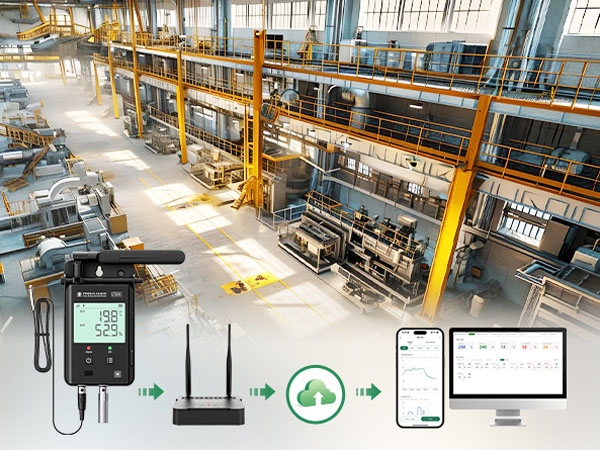
Integrating Real-Time Environmental Monitoring with BMS Workflows
Gateway-to-Cloud Data Transmission
A gateway acts as an intermediary communication layer between field devices and the cloud platform. Freshliance GAEA gateway information describes automated data transfer to the Freshliance cloud, APP and cloud-platform review, filtering, graphing, reports, and alerts through email, SMS, or APP push. G2000 information also lists 4G, WiFi, and LAN connection options for different network environments.
Offline continuity is important in real facilities. Depending on the product architecture, offline data may be retained in the logger's local memory and re-uploaded after network recovery, helping preserve continuity in the environmental record.
API integration with existing facility software
API-based integration can provide a practical method for exchanging environmental monitoring data with compatible facility software, including custom BMS-related workflows where appropriate. Freshliance provides API and webhook interfaces to enable integration of its IoT monitoring data with customer systems and third-party platforms.
In implementation, the facility team and system integrator would define the required data points, alarm events, device status, timestamps, and data-refresh logic, then map those fields into the receiving platform through the agreed API interface.
Choosing a Monitoring Topology by Facility Type
Fixed rooms and equipment areas
Coeus WiFi or 4G can be an appropriate option when the requirement is remote visibility for a defined room, refrigerator, freezer, or laboratory area. The selection should follow the available network, power arrangement, temperature range, external-probe requirement, alarm ownership, and the required data access and review workflow.
Distributed warehouses and smart facilities
LT100 Temperature Humidity Logger or LT200 Wireless Real-time Data Logger is more suitable when monitoring must cover separated rooms, racks, aisles, floors, or other zones. A LoRa-based wireless sensor network can reduce field cabling requirements by allowing distributed sensing nodes to communicate with a centralized gateway.
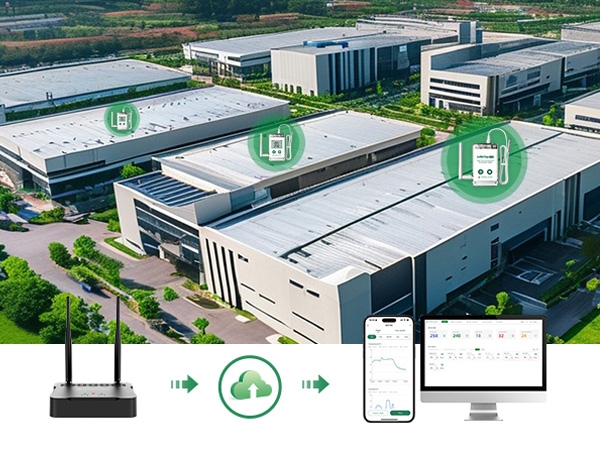
Sites that need more than temperature and humidity
GSP100 WiFi/4G Real-time Data Logger is relevant when the environmental question includes illumination, ethylene, CO2, or ammonia as well as temperature and humidity. That broader parameter set can be useful in greenhouses, agricultural environments, laboratories, warehouses, and other specialized facilities where gas and environmental conditions need to be monitored together. Exact sensor ranges and accuracy should be confirmed for the selected configuration before deployment.
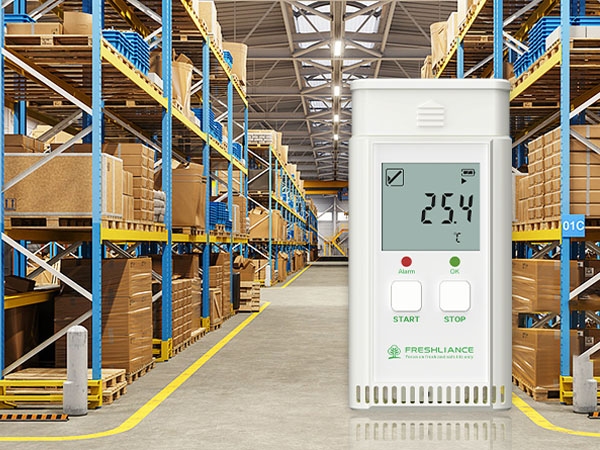
Optimizing Real-Time Environmental Monitoring for Daily Operations
Define Alarm Ownership and Escalation Procedures
Real-time monitoring is most effective when alarm notifications are assigned to clearly defined response owners and escalation procedures. Freshliance’s products support APP push, SMS, and email notifications, as well as configurable alarm points on relevant products. The facility should define the responsible personnel for alarm assessment and response, which parameters must be verified first, and when the event must be escalated to maintenance or quality personnel.
Use trends and reports alongside live readings
FreshLink supports Android and iOS and organizes device status, real-time data, historical data, alarms, groups, and downloads. The cloud and software workflow also supports filtering, graphing, and reporting. These records help teams distinguish a transient environmental excursion from a recurring trend and provide useful context for maintenance reviews, shift handovers, and environmental investigations.
For organizations planning broader system integration, the Freshliance API Service can be treated as the connection point for a defined data exchange with a BMS or another facility platform. The integration design should define data ownership, retention, alarm handling, access control, and cybersecurity requirements according to the organization's IT and security policies.
Conclusion
Real-time environmental monitoring is most effective when its data is incorporated into established facility monitoring and response workflows. Freshliance combines sensing options, Wi-Fi, 4G, LAN, and LoRa connectivity, gateway transfer, cloud platform and APP review, local data continuity, alarms, and API-supported integration. This layered structure can help facility and monitoring teams detect environmental excursions and abnormal trends earlier while keeping integration and control-system boundaries clearly defined.
Explore Freshliance wireless monitoring solutions to match the sensor, gateway, and integration path to your facility's monitoring priorities.
FAQ
Q: How does IoT environmental monitoring integrate with a BMS?
A: IoT environmental monitoring adds live readings from connected sensors to the facility's wider operating workflow. Gateways can transfer data to a cloud platform, while an API may pass selected readings, alarms, and device states into another system. The BMS remains responsible for its own control logic and integration rules.
Q: When should a facility choose LoRa instead of WiFi or 4G?
A: LoRa is useful when a facility needs multiple distributed monitoring points across rooms, racks, aisles, floors, or other separated zones. WiFi or 4G can be simpler for a defined point with a suitable network connection. The final choice should consider site layout, radio conditions, power, gateway placement, and the required monitoring density.
Q: What happens when a gateway temporarily loses network access?
A: LoRa data loggers continue to record and store data locally during network outages. Once the network connection is restored, the stored data can be uploaded to the Freshliance cloud platform through the gateway, ensuring data continuity. The platform may not show new readings while the connection is unavailable, but stored data can support later continuity and review. Facilities should still define how offline alarms, network faults, and recovery checks are handled.
Previous: Protect Stored Products with Smart Temperature Monitoring
Next: USB Temperature Data Logger for Pharmaceutical Cold Chains